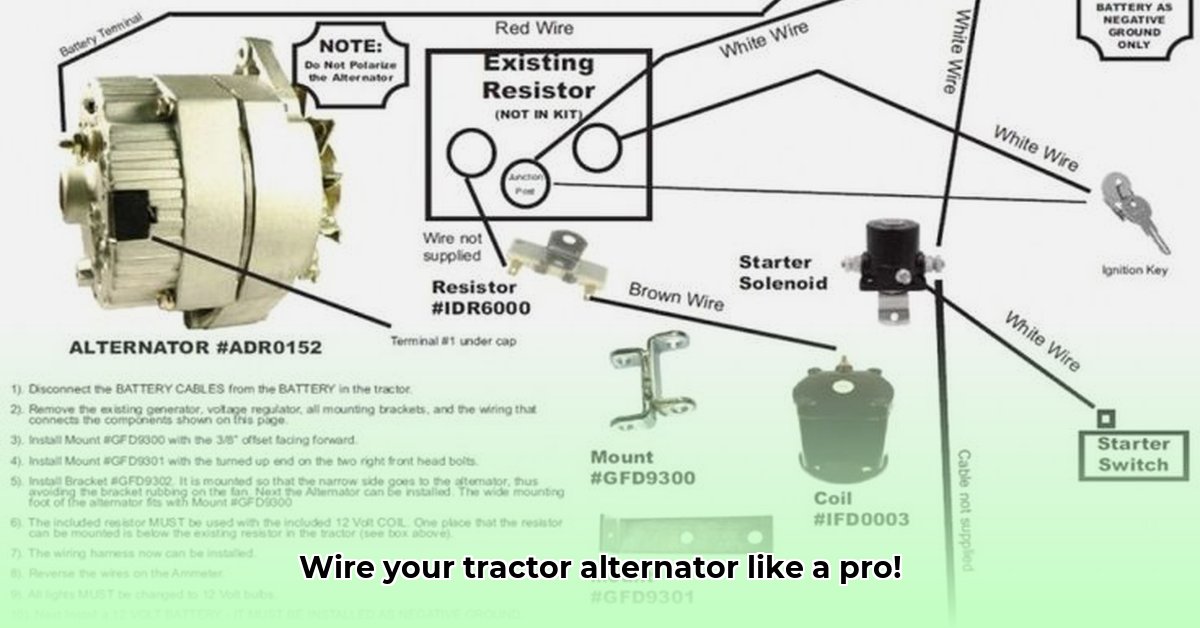
Dealing with electrical gremlins in your tractor? A one-wire alternator offers a simplified, more reliable charging system. This guide provides clear, step-by-step instructions for installation and troubleshooting, prioritizing safety throughout. Remember: always disconnect the negative battery terminal before starting any electrical work. For more on tractor battery care, see this helpful guide.
Getting Started: Tools and Materials
Before you begin, gather these essential tools and parts:
- One-Wire Alternator: Ensure compatibility with your tractor model. Using the incorrect alternator can lead to system failure.
- Wrench Set: A complete set, including various metric sizes. Tractor bolts frequently use less common sizes.
- Screwdrivers: Both Phillips and flathead screwdrivers are necessary.
- Crimping Tool: For creating secure and reliable wire connections. Use of crimp connectors is highly recommended.
- Wire Strippers/Cutters: To neatly prepare wires for connections.
- Heat Shrink Tubing: Various sizes for insulating connections and preventing shorts.
- Electrical Tape: Provides additional insulation, particularly in tight spaces.
- Multimeter: Essential for testing voltage and diagnosing problems. A digital multimeter is preferred for accurate readings.
- New Battery Terminals: Replacing these ensures good contact and prevents corrosion-related issues. This is a highly recommended preventative measure.
- Safety Gear: Safety glasses and work gloves are mandatory. Protecting your eyes and hands is crucial for preventing injury.
Step-by-Step Wiring Instructions
Follow these steps carefully for a successful installation:
Disconnect Battery: Disconnect the negative (-) battery terminal. This is a critical safety precaution to prevent electric shock.
Remove Old Alternator: Carefully remove the old alternator, taking photos or notes of the existing wiring configuration for reference.
Inspect New Alternator: Visually inspect the new alternator for any damage before installation.
Mount New Alternator: Securely mount the new alternator, referring to your tractor's manual for proper torque specifications. Incorrect torque can cause damage or failure.
Connect Single Wire: Connect the single output wire from the alternator directly to the positive (+) battery terminal. This completes the one-wire connection.
Insulate Connections: Use heat shrink tubing on all wire connections, followed by a layer of electrical tape for added protection. This crucial step prevents short circuits.
Reconnect Battery: Reconnect the negative (-) battery terminal. Double-check all connections before starting the engine.
Troubleshooting Common Problems
Even with careful installation, issues can arise. Here's how to address common problems:
Alternator Not Charging: First, check all connections for tightness and corrosion. Use your multimeter to check voltage at the alternator output and the battery's positive terminal. Low voltage indicates a problem with either the alternator or the wiring. A faulty battery will also prevent charging.
Blown Fuse: Check and replace any blown fuses associated with the charging system. Repeatedly blowing fuses suggests a short circuit requiring professional attention.
Incorrect Wiring: Carefully review each connection, referring to your tractor's wiring diagram if necessary. Incorrect wiring is a common cause of failure and can potentially damage other components.
Testing and Verification
Start the tractor's engine and use your multimeter to check the battery voltage. You should read approximately 13.5-14.5 volts. This voltage may vary slightly depending on the alternator and tractor model. Lower voltage suggests a malfunction. Test voltage again while operating a power-consuming implement (like a PTO) to confirm consistent charging under load. A significant voltage drop indicates an issue.
Alternator Specifications
| Specification | Typical Range | Notes |
|---|---|---|
| Voltage (V) | 12-14 | May vary slightly depending on the model |
| Amperage (A) | 30-100 (varies greatly) | Depends heavily on tractor size and usage. |
| Mounting Type | Varies (check your tractor's specs) | Consult your tractor's manual for details. |
Conclusion
This guide provides a general approach. Always refer to your tractor's service manual for specific instructions and safety precautions. If you're uncomfortable working with electricity, consult a qualified mechanic. Remember: safety is paramount. Regularly check your battery voltage for proactive maintenance.
Key Takeaways:
- A one-wire alternator simplifies your tractor's electrical system.
- Understanding the system is crucial for successful installation and troubleshooting.
- Always verify alternator compatibility before purchase.
- Regular system inspections and voltage monitoring are essential for preventative maintenance.
- A multimeter is your most valuable diagnostic tool.
LSI Keywords: tractor alternator wiring, one wire alternator installation, tractor charging system, troubleshooting tractor alternator, tractor electrical system repair, 12-volt tractor alternator, alternator voltage test, tractor battery charging problems, tractor maintenance, automotive alternator, DIY tractor repair, electrical troubleshooting, tractor repair guide, farm equipment maintenance.